
Can You Charge a Non-Tesla at a Supercharger? What to Know Before You Plug In

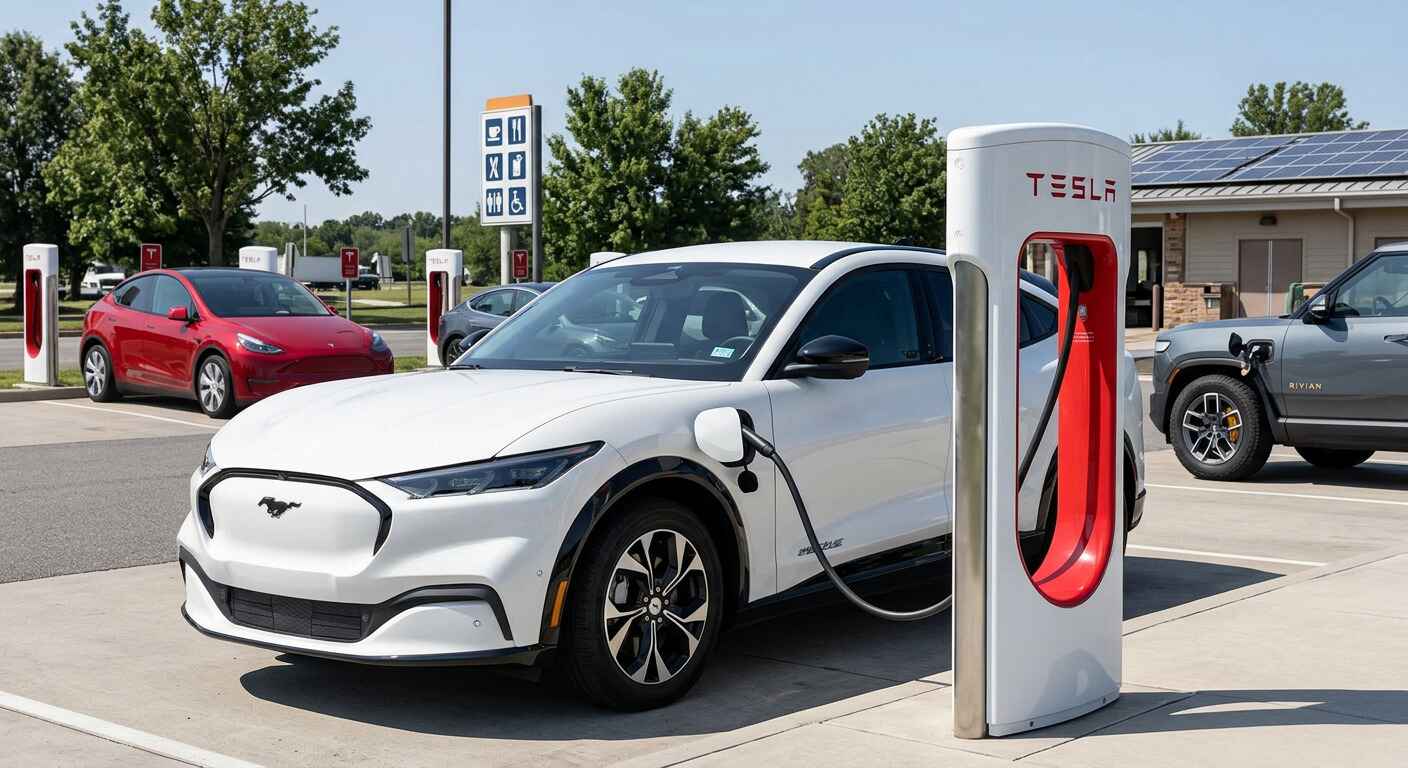
Welcome to Autos Advise, your trusted source for car reviews and automotive news. Today, we’re tackling a hot topic in the EV world: Can You Charge a Non-Tesla at a Supercharger? What to Know before pulling up to a Tesla super charger station.
Table of Contents
- The Rise of the Supercharger Network
- Can You Charge a Non-Tesla at a Supercharger?
- The Short Answer: Yes But It Depends
- Understanding Charging Connectors
- Tesla’s Connector (NACS)
- What About Older Non-Tesla EVs?
- How Fast Can a Non-Tesla Charge?
- Why Tesla Is Opening Its Network
- Are There Downsides?
- What About the Small Block Ford Supercharger?
- Best Home EV Chargers: A Smart Alternative
- Is It Worth Using a Tesla Super Charger?
- FAQs
- 1. Can all non-Tesla EVs use Tesla charging stations?
- 2. Do I need an adapter to use a Tesla super charger?
- 3. Are Tesla charging stations more expensive for non-Tesla vehicles?
- 4. Is the small block Ford supercharger related to EV charging?
- 5. What is the fastest Tesla super charger available?
- 6. Should I install a home charger instead?
- Final Thoughts
With electric vehicles becoming more common, drivers often wonder whether Tesla charging stations are exclusive to Tesla cars or if other EV brands can plug in too. Let’s break it down in simple terms so you know exactly what to expect.
The Rise of the Supercharger Network
When people think about fast EV charging, one name dominates the conversation: Tesla.
Tesla built one of the largest and fastest charging networks in the world, known as the Supercharger network. These Tesla super charger stations are strategically placed along highways, in cities, and near shopping centers. They’re known for:
- Ultra-fast charging speeds
- Reliable uptime
- Easy plug-and-charge access
- Seamless integration with Tesla vehicles
For years, Tesla charging stations were exclusive to Tesla owners. But that’s changing.
Can You Charge a Non-Tesla at a Supercharger?
The Short Answer: Yes But It Depends
Today, many non-Tesla EVs can use Tesla super charger locations. However, compatibility depends on:
- Your vehicle brand
- The connector type
- The country you’re in
- Whether the station is open to non-Tesla vehicles
In North America, Tesla has begun opening parts of its supercharger network to other electric vehicles. This move is part of a broader effort to standardize charging across the industry.
Understanding Charging Connectors
To understand whether you can use Tesla charging stations, you need to know about connectors.
Tesla’s Connector (NACS)
Tesla developed its own charging plug, now called the North American Charging Standard (NACS).
Many major automakers including Ford Motor Company and General Motors have announced they will adopt Tesla’s charging standard in upcoming EV models.
That’s a big deal.
It means future non-Tesla vehicles will directly plug into Tesla super charger stations without adapters.
What About Older Non-Tesla EVs?
If you own an EV with a CCS (Combined Charging System) connector, you may still be able to charge at certain Tesla charging stations but you’ll likely need:
- An approved adapter
- Access to a compatible Supercharger location
- The Tesla app to activate charging
Always check the Tesla app before arriving at a station. It will show whether that specific supercharger supports non-Tesla vehicles.
How Fast Can a Non-Tesla Charge?
Charging speed depends on three main factors:
- Your vehicle’s battery capacity
- Maximum charging rate
- Supercharger generation
Modern Tesla super charger locations (V3 and V4) can deliver up to 250 kW of power. If your EV supports fast charging, you could recharge from 10% to 80% in about 20–40 minutes.
That’s road-trip friendly.
Why Tesla Is Opening Its Network
There are several reasons Tesla is expanding access:
- Federal incentives in the U.S.
- Increased EV adoption
- Standardization of charging systems
- Additional revenue streams
By opening Tesla charging stations to other brands, Tesla strengthens its position as a leader in EV infrastructure.
Are There Downsides?
While the move is positive overall, there are a few considerations:
- Charging fees may differ for non-Tesla users
- You might need an app to activate charging
- Peak hours can mean longer waits
- Adapter compatibility may vary
Still, access to thousands of Tesla super charger locations is a major benefit for EV drivers.
What About the Small Block Ford Supercharger?
Now let’s clear up some confusion.
The phrase small block ford supercharger refers to something completely different. It’s not related to EV charging at all.
In traditional gasoline performance cars, especially classic Ford engines a supercharger is a device that forces more air into the engine to increase horsepower.
For example, enthusiasts often install superchargers on small block Ford V8 engines to boost performance in muscle cars.
So remember:
- Tesla super charger = EV fast charging station
- Small block Ford supercharger = Engine performance upgrade
Two very different worlds.
Best Home EV Chargers: A Smart Alternative
While Tesla charging stations are great for travel, many EV owners prefer charging at home.
If you’re shopping for the best home EV chargers, consider:
- Charging speed (Level 2 is ideal)
- Smart app integration
- Installation costs
- Weather resistance
- Compatibility with your EV
Brands like ChargePoint, Wallbox, and Tesla’s own Wall Connector are popular choices.
Home charging offers:
- Convenience
- Lower electricity rates (overnight charging)
- No waiting lines
According to the U.S. Department of Energy, most EV charging happens at home. You can explore official EV charging guidance at the U.S. Department of Energy website:
https://www.energy.gov/eere/electricvehicles/charging-home
Is It Worth Using a Tesla Super Charger?
If you’re driving a compatible non-Tesla EV, absolutely.
Benefits include:
- Reliable network
- Fast charging
- Nationwide coverage
- Easy payment system
However, if most of your driving is local, investing in one of the best home EV chargers might be more practical
FAQs
1. Can all non-Tesla EVs use Tesla charging stations?
No. Compatibility depends on your vehicle, connector type, and the specific supercharger location.
2. Do I need an adapter to use a Tesla super charger?
Many older EVs require a CCS-to-NACS adapter.
3. Are Tesla charging stations more expensive for non-Tesla vehicles?
In some cases, yes. Pricing may vary.
4. Is the small block Ford supercharger related to EV charging?
No. It refers to a performance engine upgrade for Ford V8 engines.
5. What is the fastest Tesla super charger available?
V3 and V4 Superchargers can deliver up to 250 kW or more.
6. Should I install a home charger instead?
If you charge daily and drive locally, one of the best home EV chargers is often the smartest investment.
Final Thoughts
So, Can You Charge a Non-Tesla at a Supercharger? What to Know comes down to compatibility and preparation.
The EV landscape is changing fast. Tesla charging stations are no longer just for Tesla drivers. With major automakers adopting Tesla’s charging standard, the future looks more connected and more convenient than ever.
Here at Autos Advise, we’ll continue bringing you the latest automotive news, EV insights, and in-depth reviews to help you make smarter driving decisions.
Latest Posts


Lorem ipsum dolor sit amet, consectetur adipiscing elit. Ut elit tellus, luctus nec ullamcorper mattis, pulvinar dapibus leo.
No Comments