
Selling your car yourself usually brings more money than trading it in. A dealer needs a profit margin. A private buyer pays closer to market value.
The trade off is work. You handle pricing and photos and strangers and paperwork.
The steps below follow the order of a real sale. Price it first. List it well. Meet safely. Get paid safely. Then handle the paperwork.
Rules vary by state. Check your state DMV before you close the deal.
Price It Right
Start with two free valuations. Run your car through Kelley Blue Book and Edmunds. Enter trim and mileage and true condition honestly. Do not pick excellent if the car has dents and worn tires.
KBB private party values often run a little high. Edmunds values often land closer to real sale prices. Use both as a range. Not as a promise.
Next check real listings. Search Facebook Marketplace and Autotrader near you. Find cars like yours. Match year and trim and mileage band. Note asking prices. Price near the pack to draw calls.
Get one more number. Request an instant offer from CarMax or Carvana. That offer is your floor. A private sale should beat it. If it cannot then trade in may be simpler.
Set your asking price slightly above your lowest acceptable price. Buyers expect to negotiate. Know your bottom line before the first call. Do not reveal it.
Prep and Photos
Wash the car. Clean the interior. Remove personal items. Empty trunk and glove box. Fix cheap problems. Replace a dead bulb. Top off fluids. A clean car photographs better and signals care.
Gather your records. Service receipts help. A vehicle history report helps too. Buyers trust a seller who shows records. Be honest about flaws. Mention dents and scratches and warning lights. Surprises kill deals at the meeting.
Take photos in daylight. Shoot front and rear and both sides. Shoot wheels and tires. Shoot the dashboard and odometer. Shoot seats and cargo area. Shoot the flaws too. Twenty good photos beat five dark ones.
Where to List
Facebook Marketplace reaches the most local buyers and is free to list. Craigslist still works in many areas. Autotrader and Cars.com reach serious shoppers but may charge a listing fee.
Write a clear title with year and make and model plus trim and mileage. Write a short honest description. List key features and recent work. State title status. Say if the title is clean or a loan remains. State your terms. Say cash or verified funds only.
Answer messages fast. Ignore lowball offers politely. Ignore buyers who will not meet in person. Ignore anyone who offers extra money and asks for a refund. That is a scam.
Test Drive Safety
Never meet at your home. Meet in public in daylight. A police station parking lot is a strong choice. Many departments offer safe trade zones. A busy shopping center works too.
Bring a friend and tell someone where you are going. Keep your phone charged. Before the drive ask to see a license. Hold it or ride along. Never hand over keys and stay behind. Never let a stranger drive alone.
Your policy usually covers a permitted driver. Confirm with your insurer if unsure. Remove valuables before any meeting.
Payment Safety
This is the step where sellers lose money. Follow it exactly.
Cash works for lower priced cars. Count it at the buyer’s bank. Never count large sums in a parking lot.
A cashier’s check must be verified. Call the issuing bank on a number you find yourself. Do not use a number printed on the check. Better yet meet at the buyer’s bank. Watch the teller issue the check. Then sign the title.
A wire transfer is also safe. Do it inside the bank. Confirm funds arrived before you hand over keys.
Never accept a personal check. It can bounce days later. Never accept payment apps for a large sale. Never accept an overpayment. A buyer who sends too much and asks for a refund is running a scam. Never release car or title before funds fully clear. No exceptions.
Get a signed receipt noting amount and date.
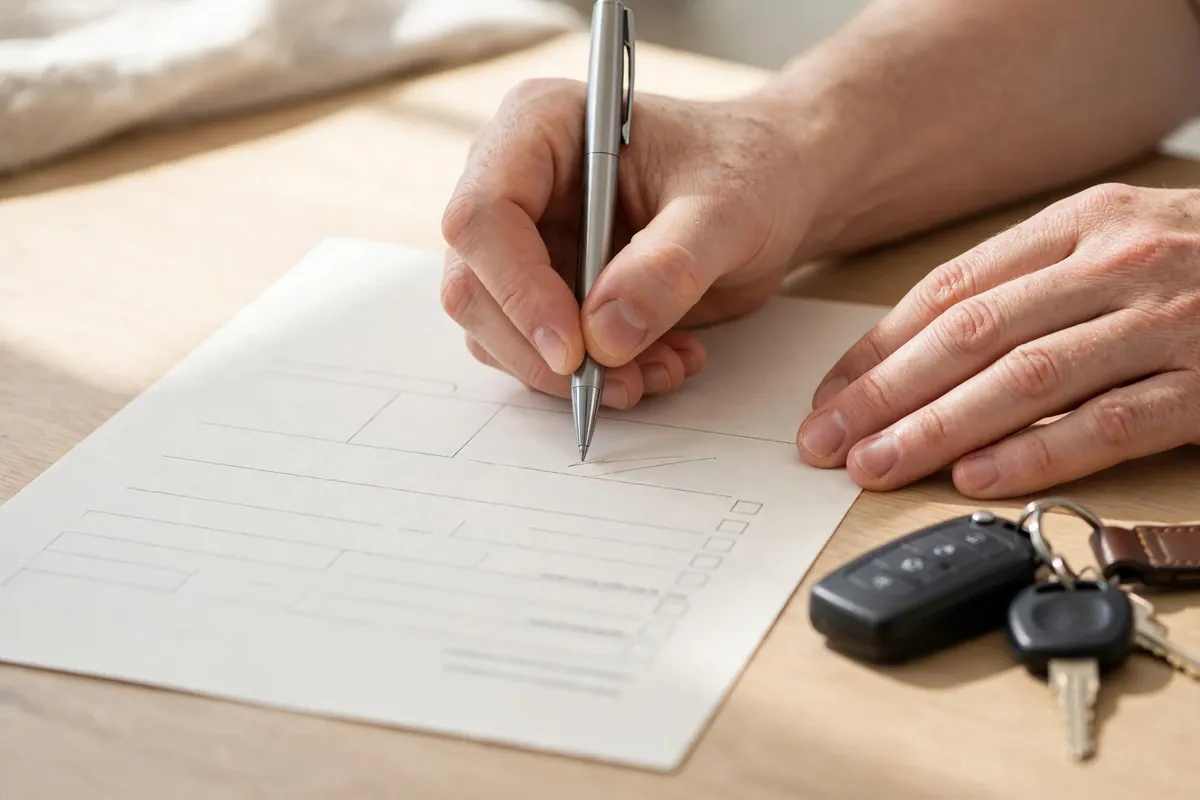
Paperwork
Title Transfer
The title proves ownership. Without it the buyer cannot register the car. Find your title before you list. If it is lost apply for a duplicate through your DMV. That takes time so start early.
Sign only in the seller fields exactly as your name appears on the front. A mistake or cross out can void a paper title in many states. If two names appear with AND then both owners must sign. If the title says OR then one signature may be enough. Check your state rules.
Fill in every blank. Enter buyer name and sale price and date and odometer reading. Federal law requires odometer disclosure for model year 2011 and newer vehicles until they reach 20 years old. Photograph the completed title before you hand it over.
Bill of Sale
A bill of sale records the deal. Some states require a form. Others accept a simple written agreement. Include:
- Date of sale
- Sale price
- Year and make and model
- VIN
- Odometer reading
- Buyer name and signature
- Seller name and signature
- A note that the car is sold as is where your state allows it
Make two copies. Keep one and give one to the buyer.
Release of Liability
File a release of liability with your state DMV right after the sale. Some states call it a notice of transfer. California and Nevada give sellers 5 days. Other states set their own deadlines. Check yours.
This form tells the state you no longer own the car. Until you file it tickets and tolls may still come to you. File online if possible. Keep the confirmation.
License Plates
Plate rules vary by state. In some states plates belong to you. Remove them before the buyer drives away. Return them or transfer them to your next car. In other states standard plates stay with the car. California is one example. Texas sellers remove their plates. Check your state DMV page before sale day.
Cancel your insurance only after the sale and transfer are complete.
Selling a Car That Still Has a Loan
If a loan remains then your lender holds the title. You cannot sign over a title you do not hold. Call your lender first. Ask for the payoff amount and how they handle a private sale.
Many sales close at the lender’s office or the buyer’s bank. The buyer pays the lender. The lender releases the lien. Then the title moves to the buyer. Electronic title transfers take longer. Start early.
Never let a buyer drive away while your loan is open. Never promise to pay it off later. The lien must clear as part of the deal.
Private Sale vs Trade-In vs Instant Offer
| Route | Money | Speed | Effort |
|---|---|---|---|
| Private sale | Highest | Weeks | High |
| Trade-in | Lowest | Same day | Low |
| Instant offer | Middle to low | A day or two | Low |
Private sale usually pays the most. Trade-in is the easiest. An instant offer is fast but priced near trade-in. Choose based on what matters more to you. Time or money.
Learn More
- Car Scrap Value: How Much Is Your Old Car Worth?
- 10 Cheapest New Cars in 2026 (Prices From $23,535)
- What to Do If Your Car Is Recalled
Frequently Asked Questions
Do I need a bill of sale to sell my car privately?
Not in every state. Some require a form. Others do not. Write one anyway. It proves date and price.
What is the safest way to get paid?
Cash counted at the bank or a wire transfer completed inside the bank. Verify a cashier’s check with the issuing bank before you sign the title.
Should I let a buyer test drive alone?
No. Ride along or hold their license. Meet in public. Bring a friend.
What if I lost my title?
Apply for a duplicate through your state DMV before you sell. A buyer cannot register the car without a signed title.
Do I remove my license plates?
It depends on your state. Some require removal. Others leave plates with the car. Check your DMV.
Can I sell a car that still has a loan?
Yes. Get a payoff amount from your lender. The lien must release before title transfers. Many deals close at the bank.

Content Writer at AutosAdvise. Thomas Mills covers new car reviews, prices, specifications, and buying guides. He aims to make every article clear, practical, and easy to understand — so readers can compare models with confidence and choose the right car for their needs.